
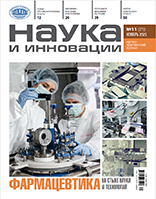
Ноябрь

Новости НАН Беларуси
- Утверждена структура государственных программ научных исследований на 2026–2030 годы
- Образ будущего Беларуси 2026–2030
- Конкурс научно-исследовательских работ для включения их в качестве заданий в государственные программы научных исследований на 2026–2030 годы
- Сергей Щербаков назначен заместителем Председателя Президиума НАН Беларуси
- Поздравление c Днем НАН Беларуси от Председателя Президиума НАН Беларуси Владимира Степановича Караника
Наши партнеры


Number 4 (241) 2023
Anatoly Lazarevich
The digital age and the outlines of the new sociotechnical reality
The article considers the features of the new world sociotechnical picture formation, emphasizing the classical concept of technological determinism transformation in the new reality.
Valery Evorovsky
Historical memory in the structure of the human "I"
There has been revealed the structure of historical memory. The author showed its connection with the structural and functioning features of individual consciousness.
Valery Maksimovich
Communicative and creative intentionality of tradition in the formation of national and cultural identity
There are marked the tendencies of the world homogenization and universalization.
Olga Pavlovskaya
Socio-ethical challenges of the 21st century
The author considers the key points of the moral factor manifesting in the face of modern world challenges and threats.
Tatiana Karnazhitskaya
National identity in the traditions of art culture
The author considers the resource potential of the national identity positioning system in the practice of art culture traditions.
Svetlana Karaseva
Socio-anthropological conditioning of religion
The author sets forth the conceptual premises of a cross-confessional approach to the study of religion and religiosity.
Nikolay Zenchuk
A utility approach to evaluating innovation
The author gives a method for quantification of the effect and effectiveness of innovations in the field of engineering, technology and consumer goods, based on a utility approach.
Yulia Vasilishina
Minsk City Technopark: innovation growth point
The author shows the main trends in the development of the Minsk City Technopark and the most significant results of the residents' innovative activities.
Mikhail Zhuravkov, Sergey Bosyakov, Sergey Shcherbakov
Artificial intelligence technologies: computer simulation systems in applied research
The authors present the developed computer simulation systems for various physical processes and phenomena with elements of artificial intelligence, and show their relevance and importance for the Republic of Belarus.
Yuri Nechepurenko
Pharmaceutical market of the Republic of Belarus and intellectual property
The patent and licensing situation in the pharmaceutical industry of Belarus has been analyzed, a relationship between the number of created original drugs and patents received was established, and the enterprise refocusing on production of generic drugs was shown.
Iryna Yemelyanovich
Combating climate change as an incentive for the creation of OIP
Based on the WIPO Innovation Vector Report, the article considers the mechanisms stimulating green innovation and achievements in the alternative energy sources development that received world patent protection in 2022.
Dmitry Grumo, Ruslan Tsvirko, Pavel Heshtaut, Mikita Rahouski
Border in Belovezha forest: what will happen to biodiversity and natural ecosystems?
The authors consider the consequences of the border fence separating the largest forestland in Europe, its further impact on the landscape, flora and fauna, and the ecology of the surrounding area. Taking into account the world experience of artificial obstacles of this kind, scientists proposed an action plan aimed at minimizing the harmful impact of the new facility on the nature of the Belarus-Poland border areas.
Iryna Kandratsenia, Olga Nikolayeva, Irina Yalyntsava
The study of the closely related bilingualism problems as the most important area of Belarusian linguistics
The article considers the issues of the modern language situation in the Republic of Belarus and the multifaceted aspects of Belarusian-Russian language relations, which acquire greater relevance for different researchers, primarily linguists, due to its social significance.
Alesya Stanovaya, Victoria Zhogla, Inessa Galets-Buy, Svetlana Loznikova, Dmitry Shcherbin
Nanoparticles in the treatment of malignant neoplasms
The article considers the methods and ways of using various types of nanoparticles in the therapy of malignant neoplasms, as well as the related problems and limitations. There is also given the characteristics of clinical drugs based on nanoparticles.
© «Наука и инновации»
При перепечатке и цитировании ссылка на журнал обязательна. За содержание рекламных объявлений редакция ответственности не несет. Мнение редакции не всегда совпадает с мнением авторов статей. Рукописи не рецензируются и не возвращаются.


При перепечатке и цитировании ссылка на журнал обязательна. За содержание рекламных объявлений редакция ответственности не несет. Мнение редакции не всегда совпадает с мнением авторов статей. Рукописи не рецензируются и не возвращаются.